
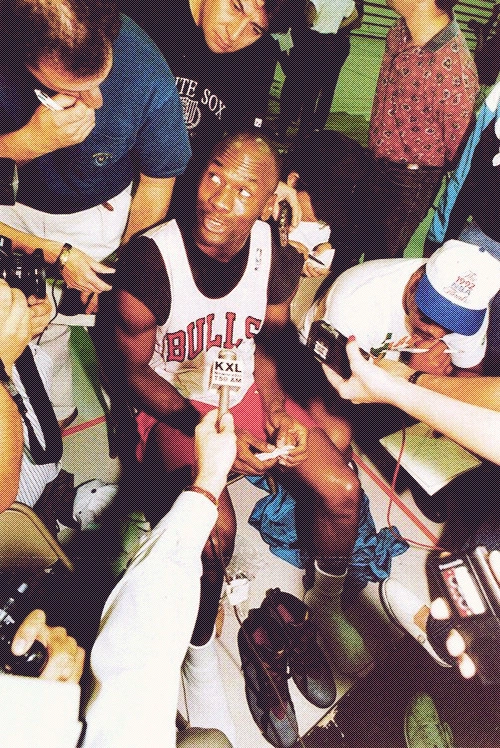
There’s a reason millions of people who couldn’t name a tyre compound will stay up until 2am to watch a Grand Prix. A reason someone who has never kicked a ball in anger will sob when their team loses. A reason an entire generation grew up wanting to “Be Like Mike.”
It’s not the sport. It’s never been the sport.
It’s the people in it. And the stories wrapped around them.
I’ll be honest… I’m fascinated by sport brands. Not just because of the scale of the audiences they command, but because of the mechanisms behind why people care. Sport is one of the last truly raw emotional experiences we consume collectively. The outcome is genuinely unknown. The stakes feel real. And the human beings at the centre of it are impossible to look away from. As a brand strategist, that’s endlessly instructive.
The child prodigy. The eternal GOAT. The one who changed everything.
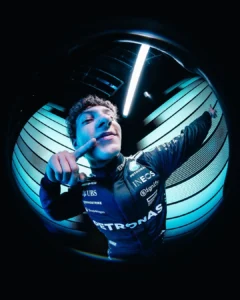
Kimi Antonelli began karting at seven years old. By twelve, Mercedes had seen enough to sign him to their junior programme. At eighteen, he stepped into the seat vacated by Lewis Hamilton – arguably the greatest of his generation – and didn’t blink. He became the youngest polesitter in F1 history, the second youngest Grand Prix winner of all time. Now nineteen and leading the 2026 World Championship, he’s not filling Hamilton’s shoes. He’s building his own.
That’s a story. And you cannot look away from it.
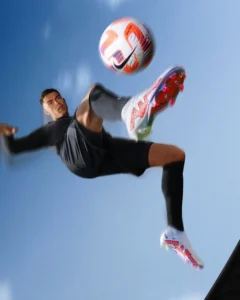
Then there’s Cristiano Ronaldo… a man who has spent two decades engineering one of the most intentional personal brands in the history of sport. The relentless work ethic. The sculpted image. The social following that dwarfs the population of most countries. Love him or find him exhausting (both are valid), you have an opinion. And that’s the point. Ronaldo understood before most that the person and the player are inseparable… and that building one builds the other.
But the most instructive example of all? Michael Jordan.
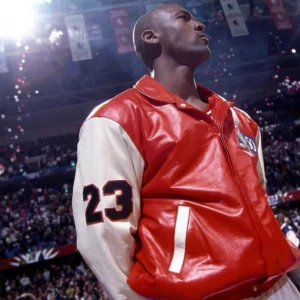
His image became synonymous with success, style, and the rise of athletes as global icons. Jordan’s marketability helped expand the NBA’s reach globally — popularising the game and contributing to the league’s international growth through the 1990s. The NBA didn’t make Jordan. Jordan made the NBA. He took a sport and turned it into a cultural movement — one that lives on in every Air Jordan drop, every basketball court from Manila to Manchester, every kid who ever hung their tongue out mid-layup.
He showed that an athlete could be more than just a player — a global ambassador, a brand, an idea.
And here’s the thing sport keeps proving, over and over again: the personal brand trumps the club brand.
People don’t follow Manchester United. They follow Ronaldo and when he left, a portion of the audience went with him. They don’t follow Ferrari. They follow whoever is inside that cockpit and what their story represents this season. When LeBron James left Cleveland for Miami, he didn’t just take his talent – he took the cultural conversation with him. The club is the stage. The player is the show.
This isn’t a small observation. It’s a fundamental truth about how human attention actually works. We are wired to follow people, not institutions. We connect with faces, not logos. We root for journeys, not jerseys. The most powerful sport brands in the world understood this and built accordingly – putting the human being at the centre and letting the institution benefit from the reflected light.
So what was the actual mechanism? What did Jordan and Ronaldo, and Antonelli… actually do that the stats and trophies alone couldn’t?
They made you feel something.
Jordan made you believe in the impossible. Ronaldo made you believe in the relentless. Antonelli makes you feel the electricity of watching someone young and fearless rewrite what’s possible in real time. Each of them pulls a different emotional lever. All of them pull hard.
And here’s the thing about emotion… once it’s triggered, logic steps aside. You’re not watching because the sport is objectively interesting. You’re watching because you’re emotionally invested in a human being and their journey. Relatability or aspiration – usually both – is what opens the door. Story is what keeps you inside.
So what does this mean for your brand?
Sports don’t have a monopoly on human stories. Every brand has them… a founder who bet everything on an idea, a product born from personal frustration, a community that grew from nothing. The question is whether you’re telling them.
And if your brand has a face – a founder, a maker, a voice – don’t hide it behind the logo. The personal brand doesn’t diminish the business brand. It amplifies it. Every time.
The brands that endure aren’t the ones with the best product specs or the most polished logo. They’re the ones that made you feel something. That gave you a belief to align with. That, at their highest level, made you feel more capable of becoming who you want to be.
That’s what Jordan did for basketball. That’s what the best brands do for their audiences.
The emotional layer isn’t the nice-to-have. It’s the whole game.
Questions every brand owner should be sitting with:
- What’s the founding story and are you actually telling it?
- What do you want people to feel when they encounter your brand?
- Is there a human face to your brand that your audience can root for?
- Are you building relatability, aspiration, or both and do you know which one your audience needs most?
- What belief does your brand stand for that goes beyond the product or service?
- If someone described your brand to a friend, what emotion would lead that sentence?
- At your highest ambition – how does your brand make people feel about themselves?
Ready to build a brand that actually moves people? Let’s chat.